


Game Community Management That Supports Business Outcomes
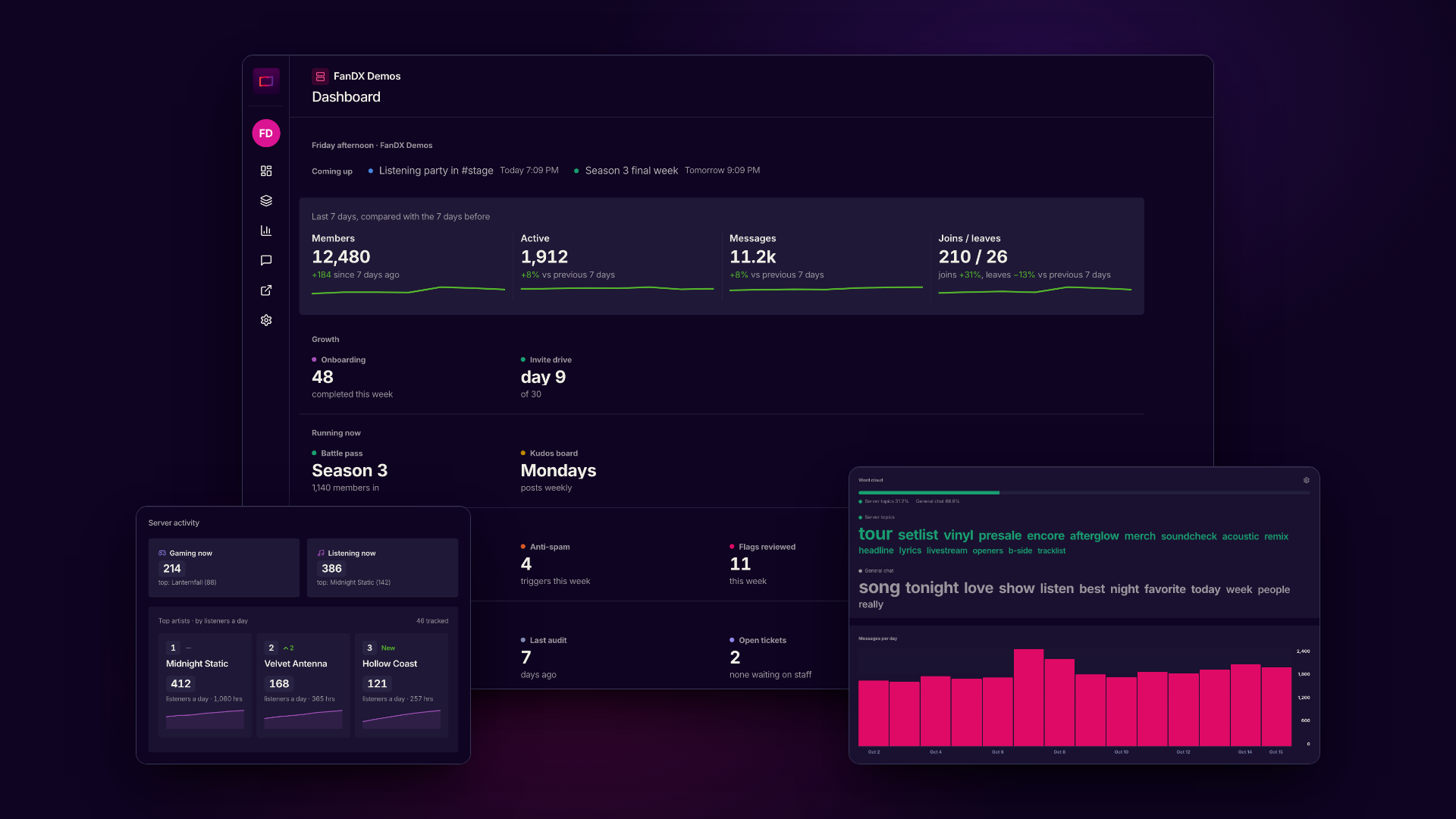
Picture your Discord hitting 120K members on day one. We’ve watched it happen on a AAA launch this year. Creators finish their sponsored streams and send viewers into the server, and the campaign report shows community growth. But who joined, why did they come, what do you want them to do, and did the community work move them toward it?
Did those viewers come to play the game? Were they looking for people to play with, access to a playtest, or an incentive the creator mentioned? Knowing why they joined gives your team somewhere to start, but the next question is whether they took the action you brought them in for.
That’s the big version. Most studios aren’t launching with 120K members, and the job is the same at 400.
Start with what the community needs to accomplish
What you need from a community depends on the titles you’re supporting and the team you have to support them. Are you an indie developer building toward your first launch, managing a live-service title with regular updates, or running a community across several titles? Each gives community members different reasons to join, and each asks something different of your team.
First launch: get interested players into playtests and onto the wishlist.
Live service: build around updates, player feedback, and reasons for lapsed players to return.
Several titles: find out which players are interested in your other titles and what would get them to try one.
The second question is who runs it. A developer with one person handling community alongside everything else needs a different plan from a studio with a dedicated community team. The plan has to fit the team running it, or the community stops getting supported altogether.
Put those two answers together and you have your objectives. Those objectives decide what data you collect, how you group members, what you ask them to do, and what you measure. The posts, events, and incentives need to support those choices.
The same goes for creator involvement. A creator who brought people into the server has already given you a shared interest to build around. What could they do with those players next?
Find out why they joined and what they need
Most teams can tell you how many people are in their Discord. Fewer can tell you why those people joined, what they came looking for, and whether they found it. Bring in your first-party data to follow what happens beyond the server: did those members join the playtest, play the game, and come back? We don’t call it retention unless we can see it in the game data, not just the chat log.
If players are struggling to find a squad, another announcement about the game won’t solve that. A session that helps them meet other players answers what they actually asked for and gives them people to come back for.
Did the creator activation bring in people who stayed involved after the stream? Did the giveaway bring in members who left once the winner was announced? Are new members finding the channels and conversations that made them want to join?
By looking at acquisition sources alongside participation, departures, and return behavior, the team can see what each activation actually did. A spike in members looks good in a report, but you need to follow those members over time to understand what the activation contributed.
For one AAA publisher, we audited the title’s Discord and built the community strategy around lapsed members, superfans, and ongoing engagement. Over ten months, the server grew from 58K to 122K members, a 110% increase.
Give members something meaningful to do
So you have interested players in the server, how do you turn that interest into an action that supports the game?
Open World Community ties XP, roles, and rewards to verified actions that matter to the title. For a pre-launch title, that means a member links their Steam account, completes a verified wishlist action, earns XP, and moves through a reward pass. It works the same at 400 members or 400,000, and the same approach covers any action your team wants to drive, like referrals, playtest participation, trailer views, or Instagram follows.
That gives the studio a measurable action tied to its launch objective, and the community team a way to see where members complete the process or drop out. It also gives your team something more useful to report than how many people saw a message asking them to wishlist. The incentive and the action need to make sense together. Access, recognition, and rewards should give the players you want in the community a reason to get involved.
Put the community work and the measurement together
If you already have a community team, Open World Community gives them the tools to track what members do after each activation and use that data in their marketing and development plans. If you need help running the work, Open World also builds and manages community programs around the titles you support and the team you have, from a first launch to a live service to a whole catalog. We take on whichever parts you need managed.
If an activation brings in members who stay and participate, that should inform the title's future. If members start the wishlist process but don’t finish it, the team needs to look at where they stopped. If participation drops after an event, you need to understand whether members had anything worth returning for.
The big win comes when the studio knows which community activities are worth repeating, where the team needs more support, and what it can stop spending time and money on.
Developers should be able to connect the community work they’re paying for to the objectives they set. If the goal is wishlists, show the verified actions. If it’s ongoing participation, show whether members keep coming back.
If you want to build a community program around the players and business outcomes your title needs, talk to us.
Latest Insights
All Insights


Santa Monica, California


