


Community Sentiment Analysis: Why Data Alone Isn't Enough
Why Community Sentiment Analysis Needs Human Context
I spend a lot of time looking at sentiment reports, and at Open World we think a lot about what they should help a team decide. I think the entertainment industry has gotten very good at putting a number next to how people feel because it makes reporting easier, without always getting much better at explaining what that number means or what should happen next.
Why Community Sentiment Scores Miss Context
The most common example is language in context. Someone in a community on Discord can say, “I thought this was going to be bad, but I love it,” or “I thought I was going to love this, but it’s bad.” Same words, completely different read. People use sarcasm, slang, inside jokes and references that only make sense if you’ve been following the conversation. A sentiment model still has to make a call on all of that, and it’s not going to get it right every time. Then most models have to reduce that message to something like low, medium or high sentiment. The cleaner the score looks, the easier it is to forget how much interpretation went into it.
That subtle context starts to matter when you’re using the output to make decisions that are going to impact your business. We’ve seen this with artist communities where merch is one of the biggest topics in a reporting window and the takeaway is something along the lines of 25% positive, 25% negative and 50% neutral. Okay, but what’s actually going on with merch? Are people excited about a drop? Frustrated about pricing? Is something sold out? If somebody still has to go back into the community and figure that out, the percentages haven’t gotten you very far.
This is where teams can get themselves into a weird cycle. They fine-tune the model, add more topics, change the weighting, teach it new terminology and manually check what it got wrong. Meanwhile, the community manager who spends every day in that space might already know the answer, or know exactly who to ask. Sometimes it’s as easy as asking fans directly what they thought of the merch drop.
Why Community Managers Matter
I trust a good community manager more than I trust a sentiment score because they have context the tool doesn’t. They know who the regulars are, what happened before a conversation started, whether the same issue keeps coming up and who they can go to for another perspective. I’m not saying one person’s gut feelings should replace the available data. People have biases too, and no one person can read everything happening in a large community. The most important thing a community manager can do is recognize when the information in front of them still isn’t enough to make a decision, then go fill in those gaps themselves through the people and context they already have access to.
“The tool should tell you where to look. The community team should help you understand what you’re seeing. Behavior should tell you how much it matters.”
Connect Sentiment Analysis to Audience Behavior
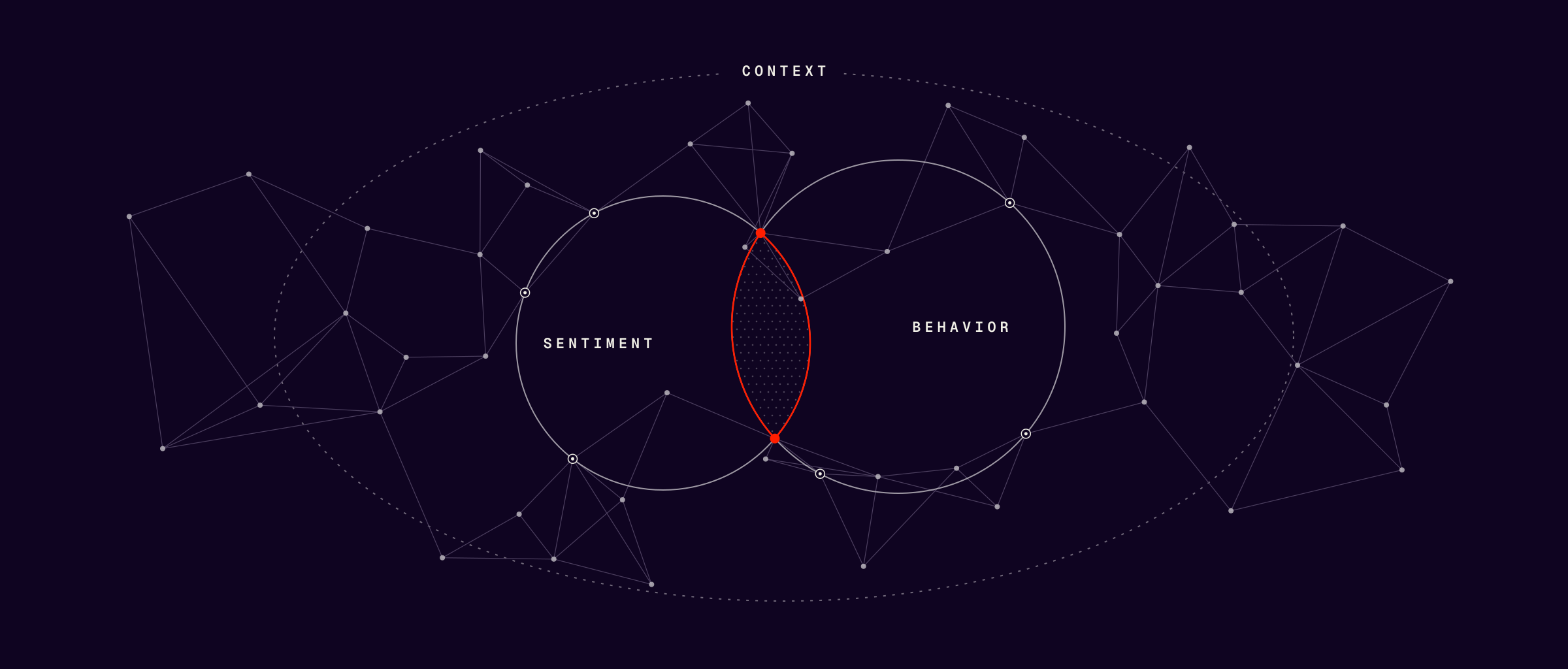
We think sentiment tooling is useful for directionality. It can tell us that a topic is coming up more often, that the conversation changed after a launch or update, or that groups within a community are reacting in different ways. You can also compare that with a social listening tool like Brandwatch to see whether the same thing is happening elsewhere. The part we care about most is what those people are actually doing. If someone complains about an artist but still buys a ticket every time they tour, they’re still a fan. If players complain about a feature but keep logging in every night, we read that very differently from players who complain and then stop playing.
Negative sentiment paired with a change in behavior is when we start paying attention. A community being frustrated for a couple of days is not always a crisis. Communities move quickly, and sometimes responding too aggressively to negative sentiment just puts a bigger spotlight on something people were already starting to move past. So if a sentiment toolset tells us, “Sentiment around this update is down 20%,” we want more context before deciding if anything needs to change or be addressed.
What to Look for Beyond a Sentiment Score
Here’s what I look for:
- What actually changed? Is there a specific announcement or conversation behind the shift? Can we anchor this against a benchmark we’ve previously established and use it to estimate when the conversation will recover?
- Who is driving it? Is this showing up across the community, or is one member or a small group driving most of the conversation? This is the difference between a sentiment issue and a moderation one.
- Are people behaving differently? Are we seeing less gameplay, community churn, weaker Spotify listening, lower purchase activity or another change tied to the brand itself?
- Is it lasting? Has this been building over time, or are people frustrated for 48 hours and then moving on?
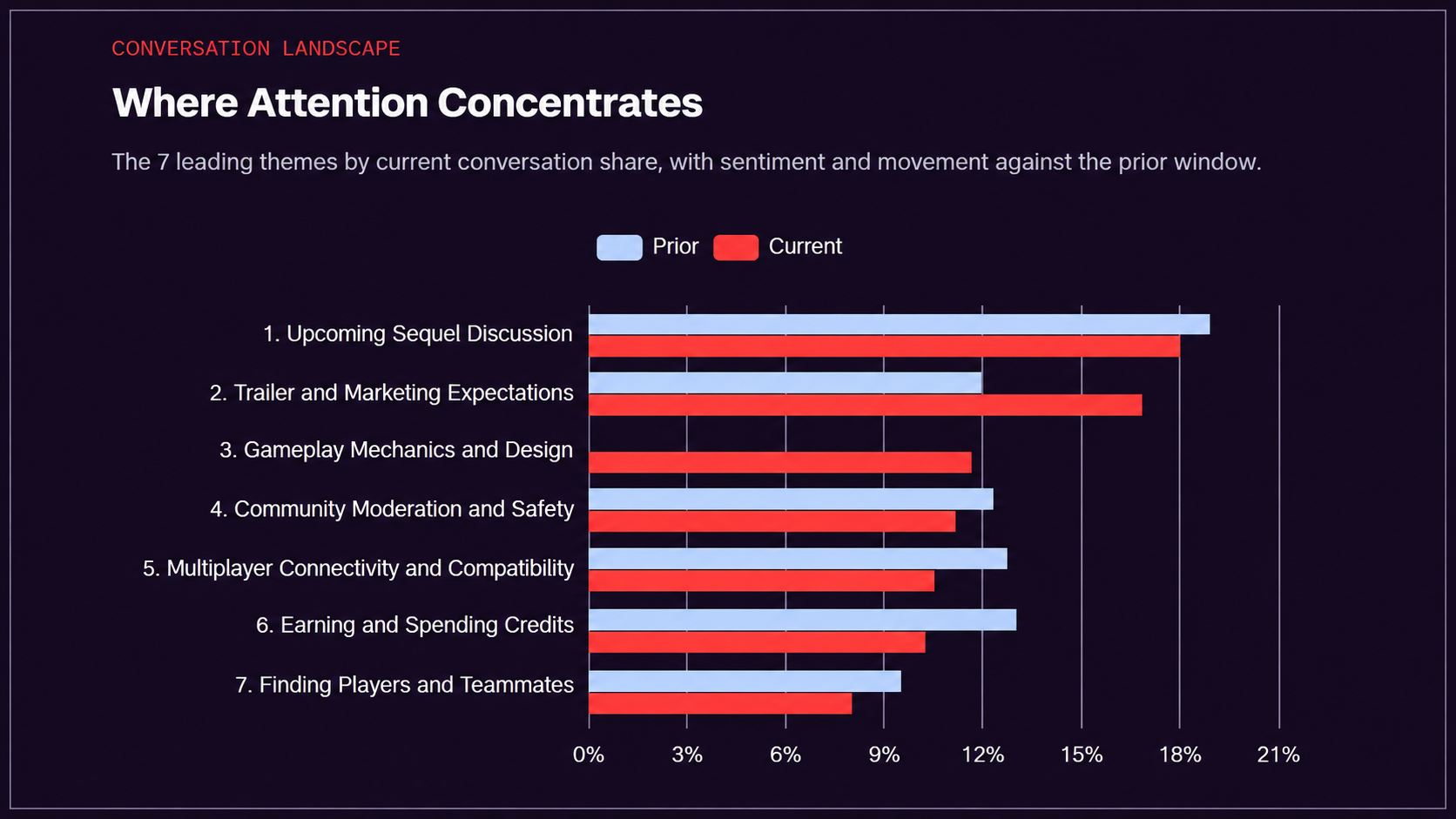
SONAR is the conversation and sentiment reporting we use at Open World to track topic movement and, where we have the data, what those people are actually doing. In one recent report, mods and save-file concerns were driving the patch conversation, especially among inactive and lapsed players. That gave the team something much more useful to dig into than a sentiment score.
Ask Your Community for Direct Feedback
There’s also a step we think community teams should use more often: ask the community.
- Run a poll.
- Open a feedback forum.
- Interview members.
- Talk to your fan mods.
If you’ve earned the right to speak directly to your audience, you can keep doing that even when the conversation isn’t tied to a marketing beat. You don’t have to wait for the next launch to ask what’s going on.
We use sentiment tooling at Open World because it can be valuable. What I don’t like is treating a score like an objective answer to how a community feels. The tool should tell you where to look. The community team should help you understand what you’re seeing. Behavior should tell you how much it matters. And if there’s still ambiguity, ask the people you’re already trying to understand.
If you want to build a community program around the players and business outcomes your title needs, talk to us.
Latest Insights
All Insights


Santa Monica, California


